
Table of Contents
- Beach Vacation Outfit Essentials
- Best Fabrics for Beach Outfits
- How to Layer Beachwear for Changing Conditions
- Styling Cover-Ups for Beach to Bar
- Accessorizing Coastal Looks Without Overdoing It
- Sustainable and Budget-Friendly Beach Style
- Frequently Asked Questions
Last Updated: September 10, 2026
Beach Vacation Outfit Essentials
Building beach aesthetic outfits starts with a small set of versatile staples that mix and match across an entire trip. Most travelers overpack and under-plan, which is why a curated capsule approach works better than stuffing a suitcase with single-use pieces.
The core of any coastal wardrobe comes down to a handful of items you can rewear in different combinations. A relaxed button-front shirt dress, a matching two-piece set, and a lightweight pair of separates form the backbone of nearly every look.
Here's the short answer on what to pack:
- Two matching sets (one neutral, one with tropical prints)
- One gauzy cover-up or button-front shirt dress
- Two breathable tops and one pair of lightweight separates
- One pair of heeled sandals for evening
- One pair of flat sandals or slides for sand
- A wide-brim hat and one piece of statement jewelry
That list covers a week of coastal dressing without repeating an outfit exactly.
Core Staples for Any Coastal Trip
Start with pieces that work double duty. A linen button-down can be worn open over a swimsuit, tied at the waist with shorts, or buttoned up for dinner. A relaxed midi dress in a breathable fabric moves from the beach to a boardwalk restaurant with nothing more than a change of shoes.
The trick most people miss: choose a color palette before you pack. Stick to two or three tones (sand, white, faded blue, or olive) so every piece coordinates with every other piece. This is the foundation of a true capsule wardrobe for coastal travel.
Matching Sets and Two-Piece Combinations
Matching sets are the single most efficient purchase for beach aesthetic outfits. One set gives you three outfits: worn together, the top styled with denim, and the bottom paired with a plain tee.
Look for sets in breathable fabrics with relaxed silhouettes. Broderie-style detailing and crochet details add texture without weight, and they photograph well against sand and water. A crochet top with matching shorts reads as intentional rather than thrown together.
Avoid stiff, structured sets. They look out of place on the sand and trap heat. The best matching sets feel like they've already been worn a dozen times.
Best Fabrics for Beach Outfits
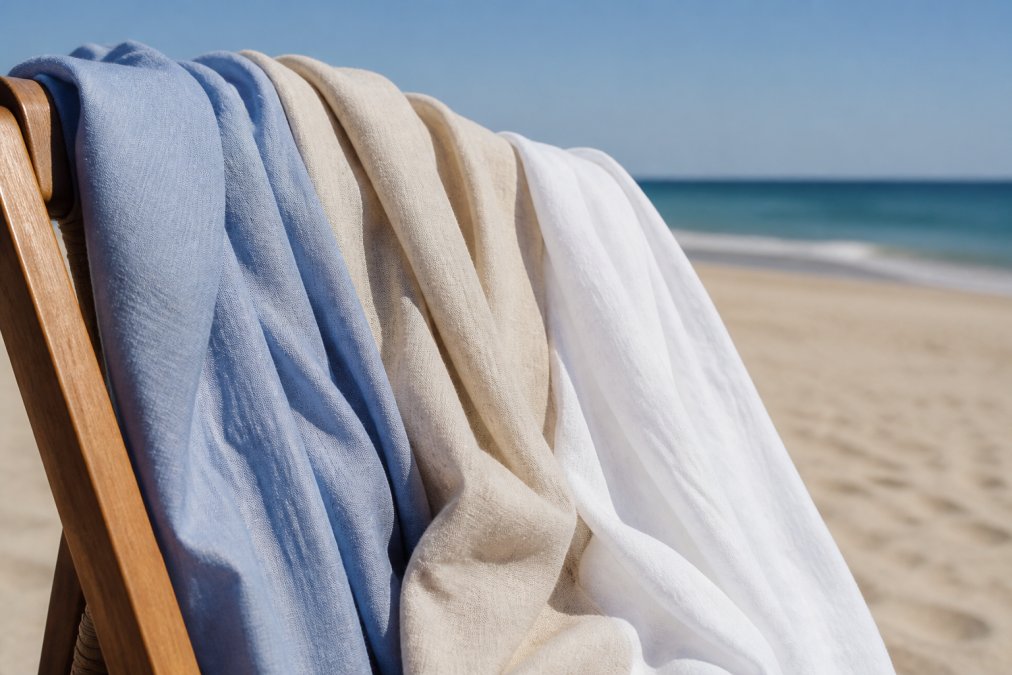
The best fabrics for beach outfits are linen, cotton, and lightweight cotton blends, all of which breathe, dry quickly, and handle sun, salt, and sand without falling apart. Fabric choice matters more than silhouette when you're dressing for heat and humidity.
Breathable Fabrics That Beat the Heat
Linen textures and cotton are the workhorses here. Linen wicks moisture and dries fast, though it wrinkles, which is part of its relaxed appeal. Cotton is softer against the skin and holds color well, making it a strong choice for printed pieces.
For warmer trips, look for gauzy cotton and open-weave knits. These fabrics let air move through, which keeps you comfortable during long afternoons in the sun.
A quick comparison of what to reach for:
| Fabric | Breathability | Dries Fast | Best For |
|---|---|---|---|
| Linen | High | Yes | Cover-ups, shirts, dresses |
| Cotton | High | Moderate | Tees, matching sets |
| Cotton-blend gauze | High | Yes | Cover-ups, lightweight layers |
| Rayon | Moderate | Yes | Flowy dresses |
| Polyester | Low | Yes | Avoid for hot days |
What to Avoid in Sun, Salt, and Sand
Heavy synthetic fabrics are the biggest mistake. Polyester traps heat and can feel clammy within minutes under direct sun. Dark, tightly woven synthetics are worse, since they absorb heat and show salt stains.
Also skip anything that requires special washing. Vacation wardrobe pieces should survive a rinse in a sink and air-dry overnight. Delicate fabrics that need dry cleaning don't belong in a beach bag.
How to Layer Beachwear for Changing Conditions
Layering beachwear is about preparing for temperature swings without hauling a second wardrobe. Coastal evenings cool down fast, and air-conditioned restaurants feel cold after a day in the sun. The key is to build layers that work for your specific silhouette while adapting to conditions.
The Temperature-Based Layering Formula
Most coastal destinations see a 15-20°F drop between peak afternoon and evening (weather.gov). That swing determines what you pack. For days in the 80s°F, a single breathable layer over your swimsuit is enough. For evenings in the 60s°F, you need a mid-layer and an outer piece. For breezy 50s°F, add a light knit or hoodie.
A common pattern among stylists is the "three-weight rule": pack one featherweight layer (gauze or linen), one midweight layer (cotton or light knit), and one outer layer (open shirt, kimono, or hoodie). This covers a 30°F range without overpacking.
Layering by Body Type
Generic layering advice ignores how proportions change with each added piece. Here's how to adapt the formula for different silhouettes:
- Pear shape (wider hips, narrower shoulders): Keep layers open and vertical. An open linen shirt worn over a swimsuit creates a column that elongates the torso. Avoid cropped mid-layers that cut across the widest part of your hips. A long, open cover-up that falls below the hip is your best friend.
- Apple shape (fuller midsection): Choose mid-layers that skim rather than cling. A racer back tank in a breathable fabric works better than a tight tee. Add an open, structured outer piece (like a button-front shirt dress worn open) to create vertical lines that draw the eye up and down.
- Hourglass shape (defined waist, balanced bust and hips): You can handle more volume in layers. A belted cover-up or a wrap-style kimono highlights your waist without adding bulk. Mid-layers that tuck in slightly at the waist keep your shape visible.
- Rectangle shape (straight up and down): Create curves with your layers. A cropped mid-layer over a high-waisted bottom adds dimension. An open outer piece with a belt at the waist gives the illusion of a defined silhouette.
- Inverted triangle (broader shoulders, narrower hips): Balance your top half with layers that add volume below. A mid-layer that flares slightly at the hem, paired with wide-leg linen pants, evens out your proportions. Avoid structured shoulders or bulky outer pieces.
Transitional Pieces That Do the Heavy Lifting
A button-front shirt dress worn open over a swimsuit works at the beach, then buttoned up for dinner. A light hoodie thrown over a matching set handles a breezy evening walk. A kimono-style cover-up in a gauzy fabric adds warmth without weight and can be tied at the waist for shape.
Pack layers in the same color family so they always coordinate. This is where a capsule wardrobe pays off: fewer pieces, more combinations, less decision fatigue. For a week-long trip, three layers (one featherweight, one midweight, one outer) in two neutral tones cover every condition.
Styling Cover-Ups for Beach to Bar
The beach-to-bar transition is where most outfits either shine or fall apart. The goal is a cover-up that looks intentional on the sand and appropriate at a restaurant without a full change.
Gauzy cover-ups in solid colors or subtle tropical prints work best. Sheer fabrics over a matching swimsuit read as effortless style rather than an afterthought. A long, open cover-up with a belt can be cinched at the waist for a more polished look.
For footwear, swap flat sandals for heeled sandals. This single change shifts the entire outfit from beach mode to evening mode. Add statement earrings, and you're done.
Accessorizing Coastal Looks Without Overdoing It
Accessories make or break coastal dressing, and the most common mistake is wearing too many at once. Pick one focal point per outfit, then keep everything else minimal.
Statement earrings pair well with a plain cover-up. A wide-brim hat works best with a simple matching set. A woven bag or a single bracelet finishes a look without competing for attention.
For sun protection, a hat and sunglasses are functional first and stylish second. Choose a hat with a wide brim that actually shades your face and neck, not a decorative one that leaves you squinting.
Footwear follows the same logic. Heeled sandals for evening, flat sandals or slides for the sand. Avoid anything with a heel that sinks, and avoid closed shoes that trap sand against your skin.
Sustainable and Budget-Friendly Beach Style
Sustainable beach style and budget-friendly styling are not opposites. The most eco-friendly choice is often the cheapest: buy fewer pieces, choose natural fabrics, and rewear them for years. But the real gap in most guides is how to make those pieces work for your body type without buying new.
Eco-Friendly Choices That Last
Natural fibers like linen and cotton biodegrade and require less processing than synthetics. Look for pieces that are built to last rather than fast-fashion items that lose shape after a few washes. According to the Ellen MacArthur Foundation's work on circular fashion, extending the life of clothing is one of the most effective ways to reduce its environmental impact.
Care matters as much as the purchase. Washing in cold water, air-drying, and storing knits flat all extend the life of natural fabrics. These habits also protect embroidery and printed designs from fading.
DIY Styling for Your Body Type
You can achieve the beach aesthetic with what you already own by tailoring each piece to your silhouette. Here's how to style existing closet items for different body types:
- Pear shape: Take a men's button-down shirt and wear it open over a swimsuit. Knot it at the waist to define your narrowest point. Pair with your widest-leg linen pants to balance your hips. A long scarf worn as a sarong adds vertical lines.
- Apple shape: Use a oversized tee as a cover-up. Cinch it with a belt just below the bust to create an empire waist. Roll the sleeves to draw attention to your arms. A long necklace adds a vertical line that elongates your torso.
- Hourglass shape: Wrap a sarong or large scarf around your waist as a skirt over your swimsuit. Tie it at the side to highlight your waist. A fitted tank tucked into high-waisted shorts keeps your proportions visible.
- Rectangle shape: Layer a cropped tee over a long tank to create curves. Add a belt at your natural waist over a flowy dress. A wide-brim hat adds width at the top to balance your straight silhouette.
- Inverted triangle: Wear a v-neck or scoop-neck top to draw the eye down. Pair with wide-leg pants or a flared skirt to add volume below. Avoid shoulder pads or structured tops.
Packing Hacks for a Capsule Wardrobe
Pack around a single palette so everything coordinates. Bring one scarf or bandana that doubles as a hair tie, a bag accent, and a cover-up for shoulders. Use the bundle method: lay larger items flat, place smaller items in the center, and fold the edges over. This reduces creases and saves space. Leave one outfit's worth of room for anything you pick up on the trip.
A packing checklist for a week-long coastal trip:
- Two matching sets (one neutral, one print)
- One button-front shirt dress
- One gauzy cover-up
- Two breathable tops
- One pair of lightweight separates
- Heeled sandals and flat sandals
- Wide-brim hat
- One piece of statement jewelry
- One light hoodie for evenings
- One scarf or bandana (multi-use)
That's a complete vacation wardrobe that fits in a carry-on and works for any body type.
Frequently Asked Questions
What is the 3-3-3 rule for packing beach outfits?
The 3-3-3 rule means packing three tops, three bottoms, and three pairs of shoes that all mix and match. This creates at least nine outfit combinations from just nine items, which keeps your suitcase light while covering beach days, dinners, and exploring. Choose neutral colors and breathable fabrics so everything works together. For beach aesthetic outfits, add one gauzy cover-up and a versatile layer like a button-front shirt dress to handle sun and sand transitions without overpacking.
How do I layer beachwear without feeling bulky?
Start with a lightweight base like a fitted tee or racer back, then add a breathable mid-layer such as a linen button-down or crochet top. Finish with a gauzy cover-up or open shirt dress that moves with the wind. Stick to natural fabrics that breathe and avoid heavy knits. For cooler evenings, a lightweight hoodie or relaxed cardigan works. The key is choosing thin, loose layers that you can remove easily when the sun comes out, keeping your beach aesthetic intact.
What are the best fabrics for beach outfits in hot weather?
Linen, cotton, and rayon are your best bets. Linen wicks moisture and dries quickly, cotton is breathable and soft, and rayon drapes well without clinging. Avoid polyester and nylon for direct sun exposure because they trap heat and can feel sticky. For swimwear and cover-ups, look for quick-dry blends. If you want sustainable options, organic cotton and Tencel are good choices. Always check the care label, as natural fabrics may need gentler washing to keep their shape and color.
How can I transition my beach outfit from day to night?
Swap your flip-flops for heeled sandals or espadrilles, add statement earrings, and tie a lightweight scarf or denim jacket around your shoulders. A button-front shirt dress works for both: wear it open over a swimsuit during the day, then button it up and add a belt for dinner. Keep a small clutch or crossbody bag in your beach tote. These small changes take your look from sand to restaurant without needing a full outfit change, so you can enjoy the sunset without rushing back to your room.